


.svg)












Every business knows that moment. The phone rings at the worst possible time. A customer wants a quick answer, wants to check availability, or wants to book an appointment. Your team is busy. The call goes to voicemail. And a few moments later, that potential customer decides to call your competitor instead.
Not long ago, automating phone-based customer service meant expensive call center systems and elaborate voice menus where callers had to tap through option after option just to get a simple answer.
Today, that's changed completely. By combining speech recognition, language models, and voice synthesis, it's now possible to build an AI voicebot that holds a natural conversation, understands what the caller is asking, and actually does something about it: checking availability, providing pricing, or booking an appointment on the spot.
In this article, we explain what an AI voicebot is, how it works, and where it makes the biggest difference. We'll also walk through the real business benefits and what to keep in mind before you deploy one.
What Is an AI Voicebot?
An AI voicebot is a system that can hold a spoken conversation with a person. Unlike traditional phone systems, it doesn't rely on scripted announcements or number-pad menus. Instead, it understands natural speech and responds in a way that feels like talking to an actual person.
In practice, that means a customer can simply say what they need. The voicebot can answer their question, check availability, provide a price, book an appointment, or hand the call off to a human agent.
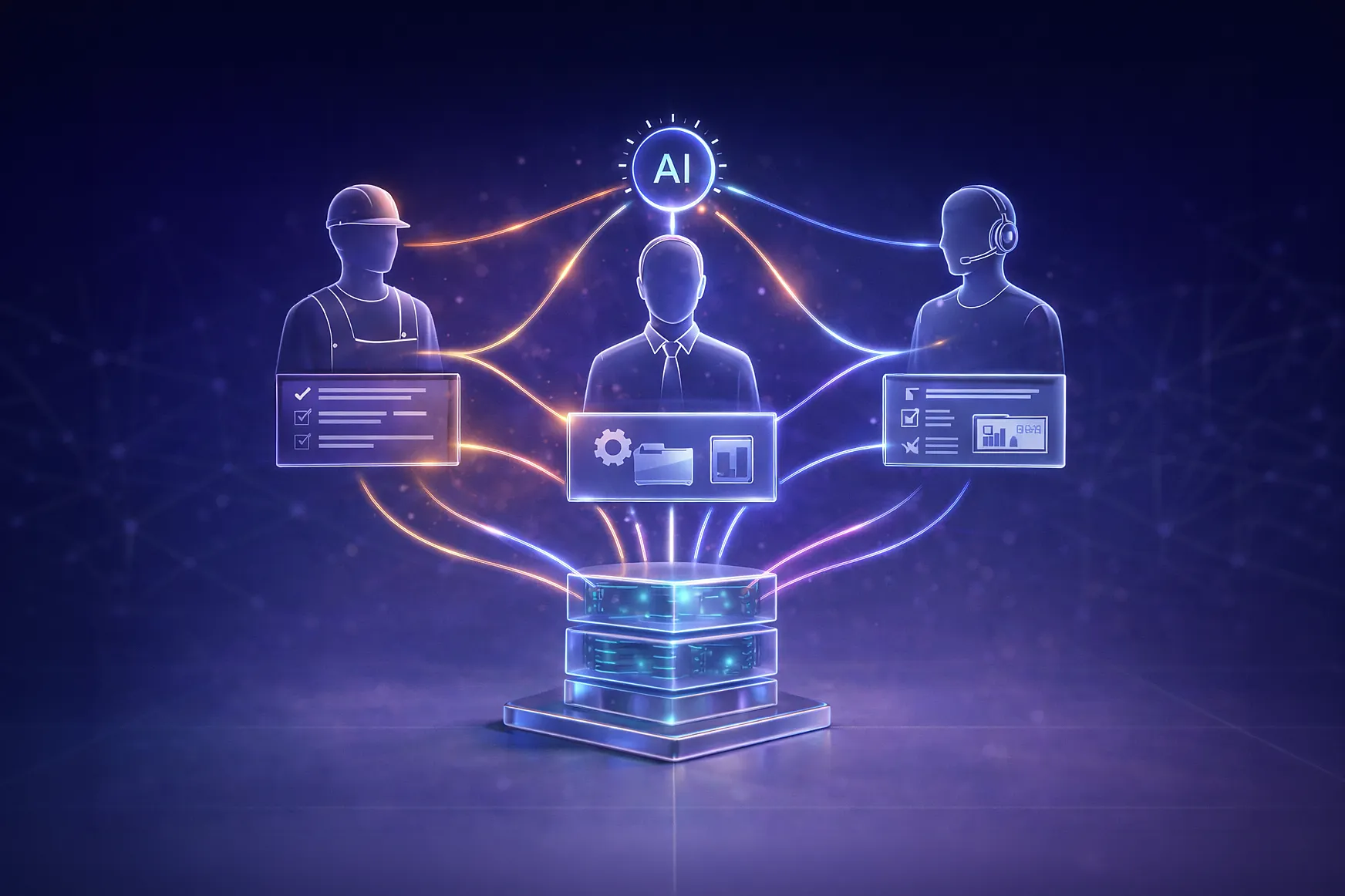
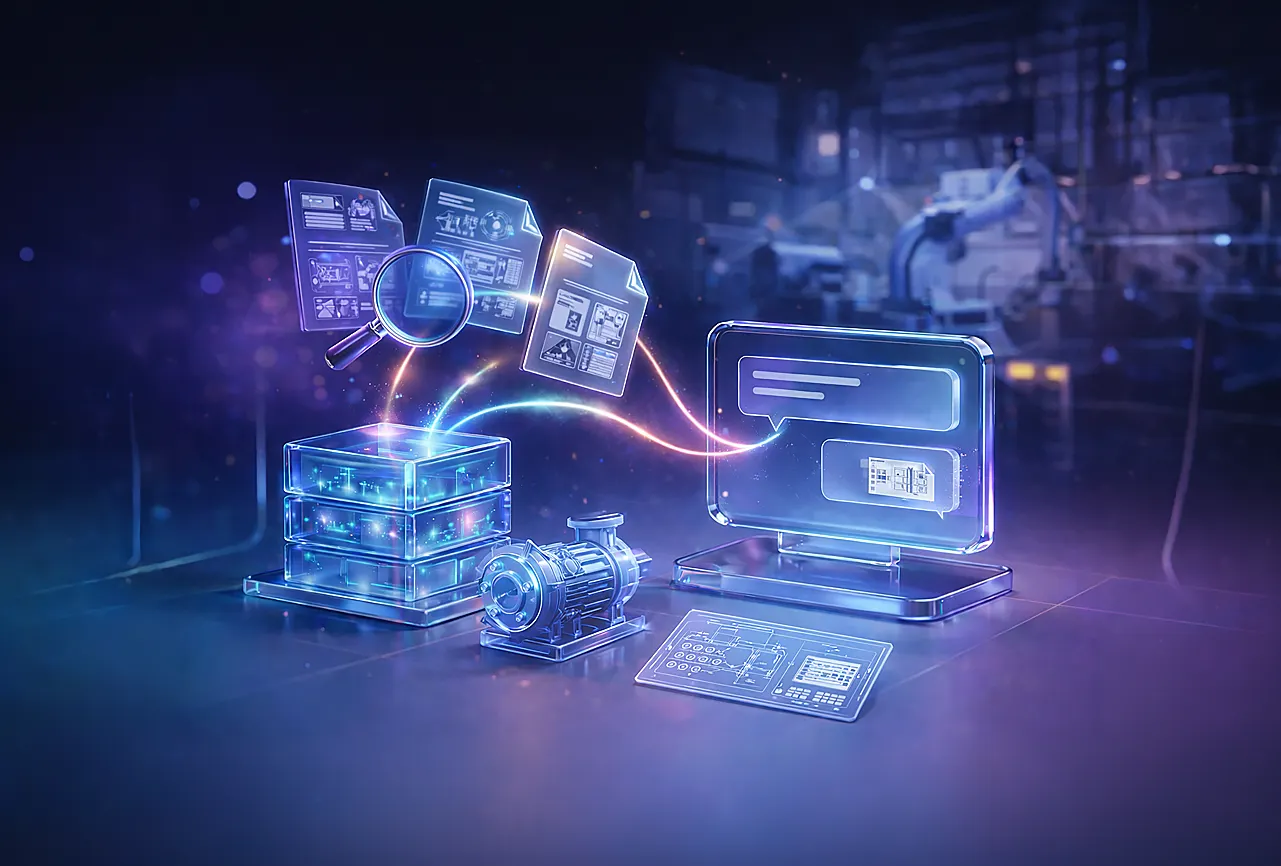
Modern voicebots are far more than simple phone automations. They can be integrated with your company's calendar, CRM, knowledge base, or any other tool your team uses. This means they don't just answer questions; they take action inside your systems.
More advanced implementations operate using what's called a cognitive architecture, where AI models, contextual memory, and company system integrations work together in real time to handle each conversation.
How Does an AI Voicebot Work?
From the caller's perspective, it's just a phone call. But underneath, several layers of technology are working together in real time.

1. The caller says what they need
The conversation starts like any other. A customer calls and asks a question or describes what they're looking for: a booking, a price check, available time slots.
2. The system converts speech to text
The first layer is speech recognition technology, speech-to-text. It transforms what the caller says into text that the system can analyze.
3. An AI model interprets the intent
A language model then processes the text and determines what the caller actually wants. At this stage, the system isn't just reading words; it's trying to understand the meaning and context of the conversation.
4. The voicebot retrieves data or takes action
If the voicebot is integrated with your company's systems, it can act on that understanding immediately: checking a calendar, pulling information from a knowledge base, reading CRM data, or triggering a specific workflow.
5. The system prepares a response
Based on what it found, the AI model generates a response that's clear, natural, and appropriate to the situation. This is where a well-crafted prompt and solid logic make all the difference.
6. Text is converted back to speech
The response is passed to a text-to-speech module. Instead of a robotic system message, the caller hears a voice that carries the conversation naturally.
7. The conversation continues, or ends with a concrete outcome
If the caller needs more information, the voicebot continues. If the goal is achieved, it can wrap up the call, confirm a booking, or transfer to a human agent.
This combination of layers is what separates a modern AI voicebot from a traditional phone automation.
AI Voicebot in Action: Real Conversation Example
The easiest way to understand how a voicebot works is to see it in action. In the clip from our webinar below (originally recorded in Polish, with automatic English translation available on YouTube), we show an example conversation where the voicebot answers customer questions and executes real actions.
AI Voicebot Use Cases by Industry
Voicebots work best where customers frequently call with similar questions or need to complete a simple action quickly.
- Restaurants: Accepting table reservations, sharing opening hours, answering questions about takeaway or delivery orders, and providing menu information
- Beauty and personal care: Booking appointments, checking available time slots, and sending reminders about upcoming visits
- Auto workshops: Letting customers schedule tire changes, servicing, or diagnostics by phone, and sharing repair status updates
- Medical practices: Handling patient registration, checking doctor availability, and sending appointment reminders
- E-commerce: Answering questions about order status, product availability, and return policies
- Logistics and courier companies: Letting customers track shipments, check delivery windows, or get transport information
- Hotels and travel: Accepting reservations, sharing room availability, and answering questions about the offering
Why Companies Are Adopting AI Voicebots
There's a reason voicebots are gaining traction across industries. A well-designed voicebot delivers measurable advantages.
- 24/7 availability: The voicebot answers calls and responds to customer questions at any hour, even when the office is closed.
- Automation of repetitive requests: A large portion of incoming calls cover the same ground: opening hours, available slots, order status. The voicebot handles these automatically.
- Faster service: Instead of waiting in a queue for a human agent, the customer gets an immediate answer or completes a simple action right on the call.
- Scalability: Unlike a human team, a voicebot can handle multiple conversations simultaneously, even during peak hours.
- System integrations: The voicebot can check your calendar, CRM, or order management system, so it doesn't just answer questions; it gets things done.

What to Keep in Mind Before You Deploy a Voicebot
A voicebot can significantly improve customer service, but its effectiveness depends heavily on how it's designed and implemented. A few things deserve serious attention.
Handling more complex conversations
Simple cases like checking opening hours or booking a slot are straightforward. The challenge comes with more complex interactions. A customer might want to reschedule an existing appointment, ask about multiple services at once, or press for details about your offering mid-conversation.
In these situations, the voicebot needs to track context and make decisions in real time. That's why more sophisticated deployments use a cognitive architecture where multiple AI components work together to follow the conversation and determine the next step.
Data quality and integrations
If the voicebot draws on your calendar, CRM, or knowledge base, those sources need to be accurate and up to date. Otherwise, the voicebot will give incorrect information or offer time slots that aren't actually available.
Integration with existing systems
In many companies, the voicebot needs to work alongside systems that have been in place for years: CRM platforms, order management tools, customer service platforms, internal databases. These systems aren't always built with modern APIs or easy integration in mind.
In those cases, the real challenge isn't the voicebot itself. It's connecting it to your infrastructure reliably and securely.
Infrastructure and data security
It's worth thinking through where your system actually runs. Are conversations processed in your technology partner's cloud, on your own servers, or in a hybrid model?
This matters especially in sectors where customer data is sensitive, such as healthcare, finance, and e-commerce. In those contexts, security, regulatory compliance, and control over your data are critical.
Testing and ongoing improvement
A voicebot isn't a set-it-and-forget-it solution. In practice, it requires regular testing, conversation analysis, and gradual refinement of how it handles dialogue.
How to Deploy a Voicebot in Your Company
There are a few different paths to building a voicebot. In practice, most companies take one of three approaches.
- No-code platforms: Tools like ElevenLabs, Vapi, or similar voice agent platforms let you configure a voicebot without building the entire infrastructure from scratch.
- Custom AI architecture: Building a solution from the ground up using AI models, speech-to-text systems, text-to-speech, and custom integrations.
- Ready-made SaaS solutions: Deploying a voicebot platform offered by a technology provider.
Depending on your needs, you can either build the voicebot independently or bring in a technology partner to support the implementation.
Building in-house
Modern AI tools have made it easier than ever to put together a basic voicebot. Platforms like ElevenLabs and other no-code solutions let you configure a voice agent without starting from zero.
That said, building it yourself also means taking on more risk. In practice, the hard parts tend to show up when dealing with intent recognition, response quality, handling unusual conversation scenarios, and integrating with your existing systems. Add to that the questions of security, data protection, system stability, and knowing when the voicebot should answer independently versus hand off to a human, and the complexity adds up quickly.
Working with a technology partner
For more advanced projects, particularly when the voicebot needs to integrate with multiple tools like a CRM, order management system, or customer service platform, it's worth considering an experienced technology partner who has built these kinds of solutions before.
That partner can design the system architecture, build the integrations, and tailor the voicebot to the specific business processes in your organization.
Thinking About Deploying a Voicebot?
Voicebots are increasingly becoming a standard part of modern customer service. That's no surprise: automating repetitive calls means serving customers faster without growing your team.
But an effective voicebot is more than connecting an AI model to a phone line. The system needs to understand conversational context, work with your company's data, operate reliably, and deliver accurate answers without hallucinating.
At WEBSENSA, we design these solutions from the ground up: architecture, integrations, and conversation logic included. If you want to see what a voicebot tailored to your processes could look like, explore our offer.


