


.svg)



















Beyond AI
How AI helps you publish videos on YouTube

Artificial intelligence (AI) is gaining increasing significance in the business world. Its development opens new opportunities for enterprises but also presents challenges. In this article, we will discuss how AI can transform various aspects of business activity, what benefits it can bring, and the threats and challenges associated with it.
Watch this material on YouTube:
Artificial intelligence finds applications in many fields of business. Companies use AI for data analysis, process automation, and offer personalization.
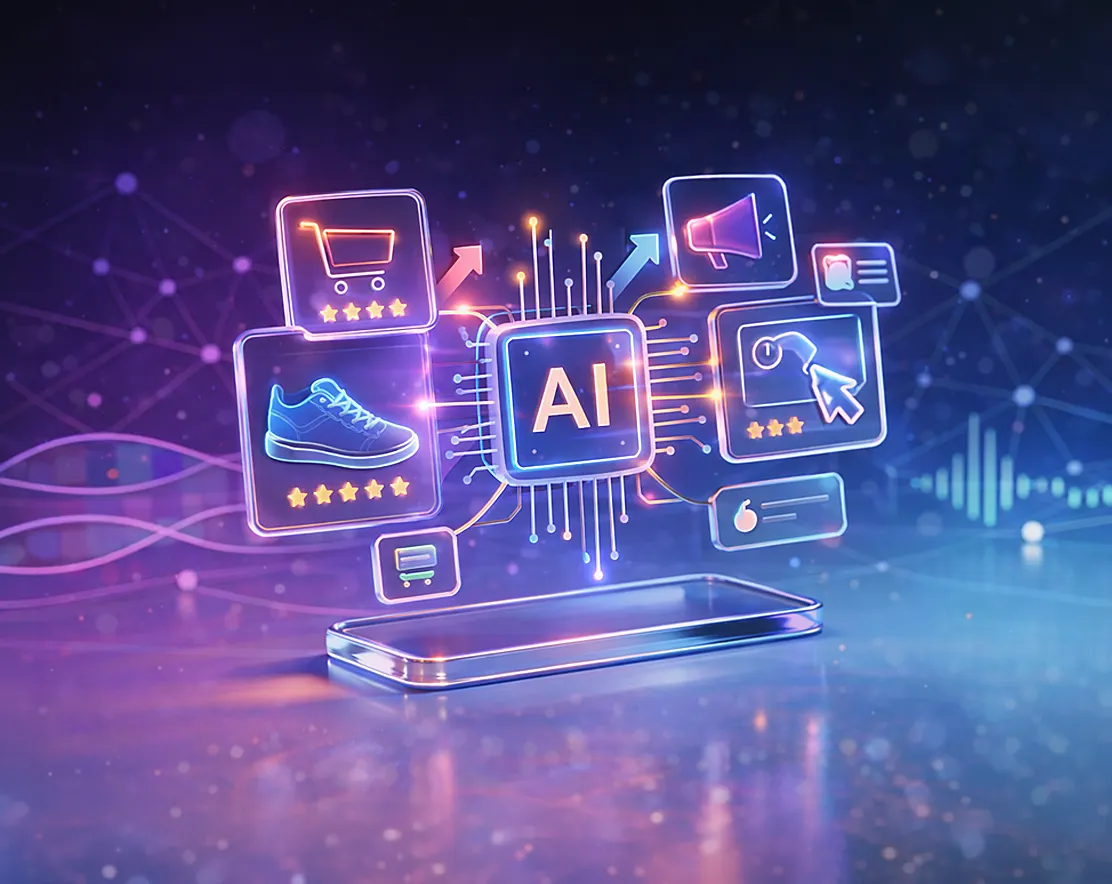
For example, an e-commerce company can use AI algorithms to better predict customer needs and tailor its products accordingly.
AI also enables the automation of customer service through chatbots, which are capable of answering customer questions and solving their problems in real-time. This automation allows companies to save costs and improve the quality of service.
One of the main benefits of implementing AI is the increase in operational efficiency. Process automation allows for the reduction of human error and shortens task completion times. Companies can also better manage their resources, which translates into savings.
AI also supports decision-making processes. By analyzing large datasets, companies can make more accurate business decisions. AI algorithms are able to identify patterns and trends that might escape human attention, enabling faster reactions to changing market conditions.
Despite numerous benefits, AI also carries certain risks. One of the biggest challenges is the issue of ethics and privacy. AI algorithms collect and analyze enormous amounts of data, raising concerns about user privacy protection. Companies must ensure adequate data security and comply with data protection regulations.
Another threat is the risk of machines replacing humans. Process automation can lead to job reductions, which is particularly visible in sectors where work is based on repetitive tasks. It is important for companies to invest in training and the development of their employees so they can adapt to new conditions.
In the face of AI development, it is important for companies to invest in new competencies for their employees.
The future of AI in business appears promising. This technology will continue to develop and find new applications. It is predicted that AI will be of key importance in areas such as supply chain management, personalized marketing, and the creation of new business models.
As AI becomes more advanced, companies will have to face new challenges. This will require not only investment in technology but also in the development of employee competencies and the creation of strategies that take into account changing market realities.
Artificial intelligence has the potential to significantly change the business landscape. Its implementation can bring numerous benefits, such as increased operational efficiency and improved business decision quality. Simultaneously, companies must be aware of the threats and challenges associated with AI, such as ethical and privacy issues and the risk of machines replacing humans.
To fully exploit the potential of AI, enterprises should invest in appropriate technologies and training for their employees. Only then will they be able to effectively adapt to new conditions and reap the rewards of the transformation brought by artificial intelligence.
1. What are the main applications of AI in business?
AI is used for data analysis, process automation, and offer personalization. Examples include predicting customer needs, automating customer service via chatbots, and supporting business decision-making.
2. What benefits can AI implementation bring?
The main benefits include increased operational efficiency, error reduction, cost savings, and improved business decision quality through data analysis.
3. What are the main threats associated with AI?
The main threats include ethical and privacy issues related to data collection and analysis, and the risk of machines replacing humans, which may lead to job reductions.
4. How can companies prepare for AI implementation?
Companies should invest in appropriate technologies and employee training so they can adapt to new conditions. It is also important to comply with data protection regulations.
We showcase many more very specific AI applications in business on our Beyond AI YouTube channel, to which you are cordially invited!


How do leaders of the Polish retail market talk about artificial intelligence? Check out interviews with the most interesting guests of Retail Trends 2024!

See how artificial intelligence supports blind and visually impaired people in everyday life – from navigation and object recognition to greater digital accessibility.


